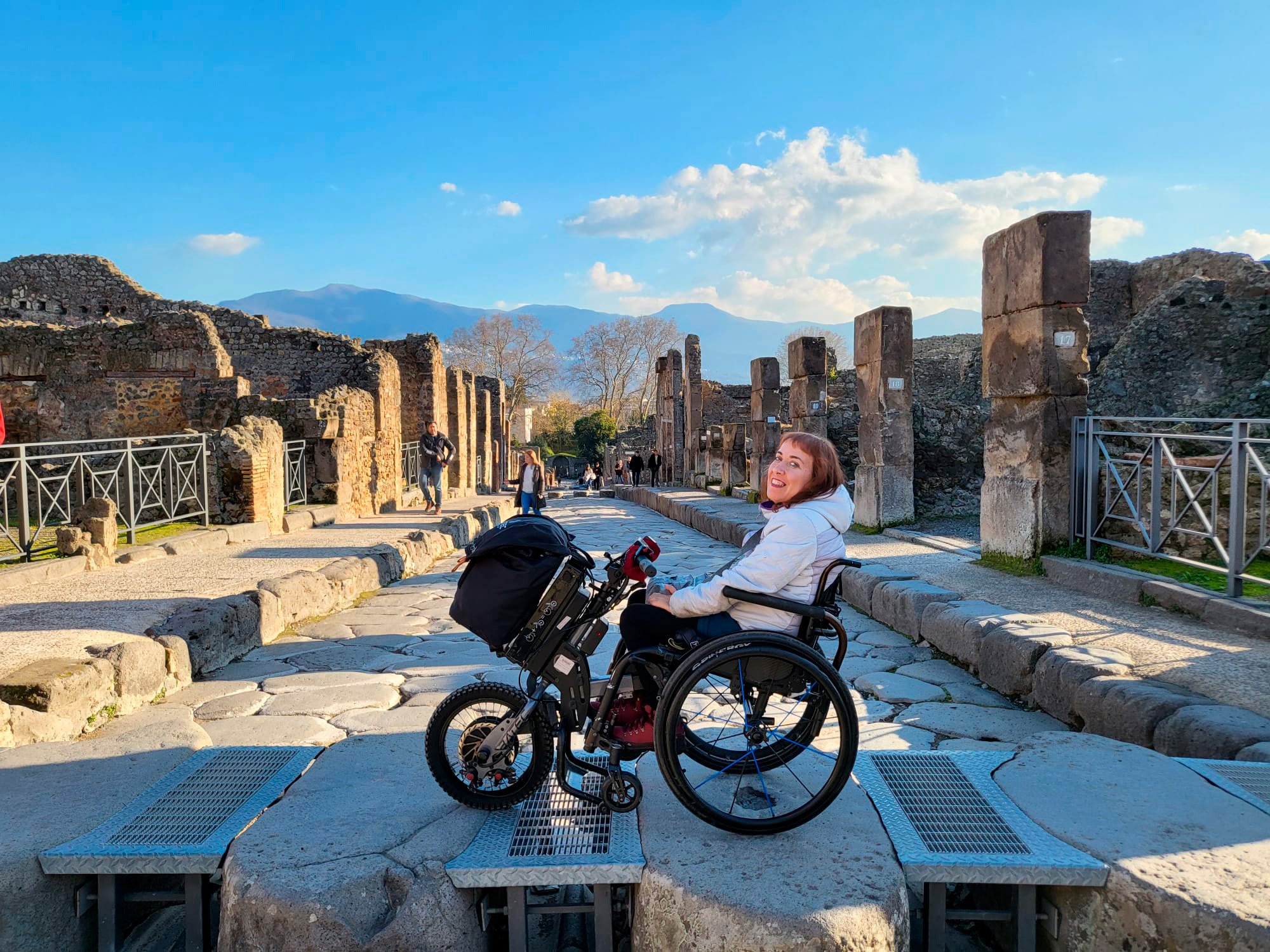
Travelling with a wheelchair can mean discovering a new country, wandering through streets steeped in history and enjoying the freedom to move without obstacles. For many people, covering long distances may seem daunting, but with the right tools, travelling in a wheelchair becomes an entirely achievable and rewarding experience.
That is how Batec Mobility was born: with the aim of turning Pau Bach’s personal limitation – inventor of the Batec and founder of the company – into an opportunity for others with similar injuries.
We specialise in developing mobility solutions for people with reduced mobility, through devices that restore independence and the pleasure of moving without barriers.
Below, we look at the main challenges, the advantages of electric handbikes and everything you need to know about how to travel in a wheelchair with greater confidence.
Challenges when travelling with a wheelchair
Travelling in a wheelchair presents certain challenges which, although they may vary depending on the destination, tend to share common features.
Demanding journeys during wheelchair travel
Getting around a city in a wheelchair can become physically demanding. What is a simple stroll for many involves effort, planning and, at times, frustration for others.
Every journey requires extra energy, both physical and mental, particularly when the surroundings are not accommodating. This is one of the main factors that can make wheelchair travel more tiring without the right mobility support.
Barriers, wheelchair accessibility and travel planning
These demands are compounded by environmental obstacles: uneven pavements, impassable kerbs, endless hills and unexpected barriers that require constant vigilance.
Although many countries have made progress in wheelchair accessibility, inadequate ramps, limited lifts and poorly adapted public transport are still common.
Even in popular tourist destinations, it is not unusual to find hotels without accessible bathrooms or monuments with restricted access, limiting spontaneity and making it necessary to plan every step in advance when travelling with a wheelchair.
Dependence on the move
In this context, without an assisted propulsion system, constant help becomes almost essential on longer journeys or difficult terrain.
This can create a sense of dependence that restricts freedom of movement, particularly when no companion is available or the environment offers no accessible solutions for wheelchair users.

How electric handbikes improve wheelchair travel
Travelling in a wheelchair does not have to mean restricted movement or limited freedom. In fact, an electric handbike is designed precisely to address these challenges:
Assisted propulsion for longer journeys
With an electric handbike, you can cover long distances without excessive physical effort.
Think of airports, city centres or tourist routes, where manual mobility can be limiting or completely exhausting. Thanks to the electric motor, you can move with ease, avoid unnecessary fatigue and preserve your energy to fully enjoy the journey.
Adaptability for accessible travel
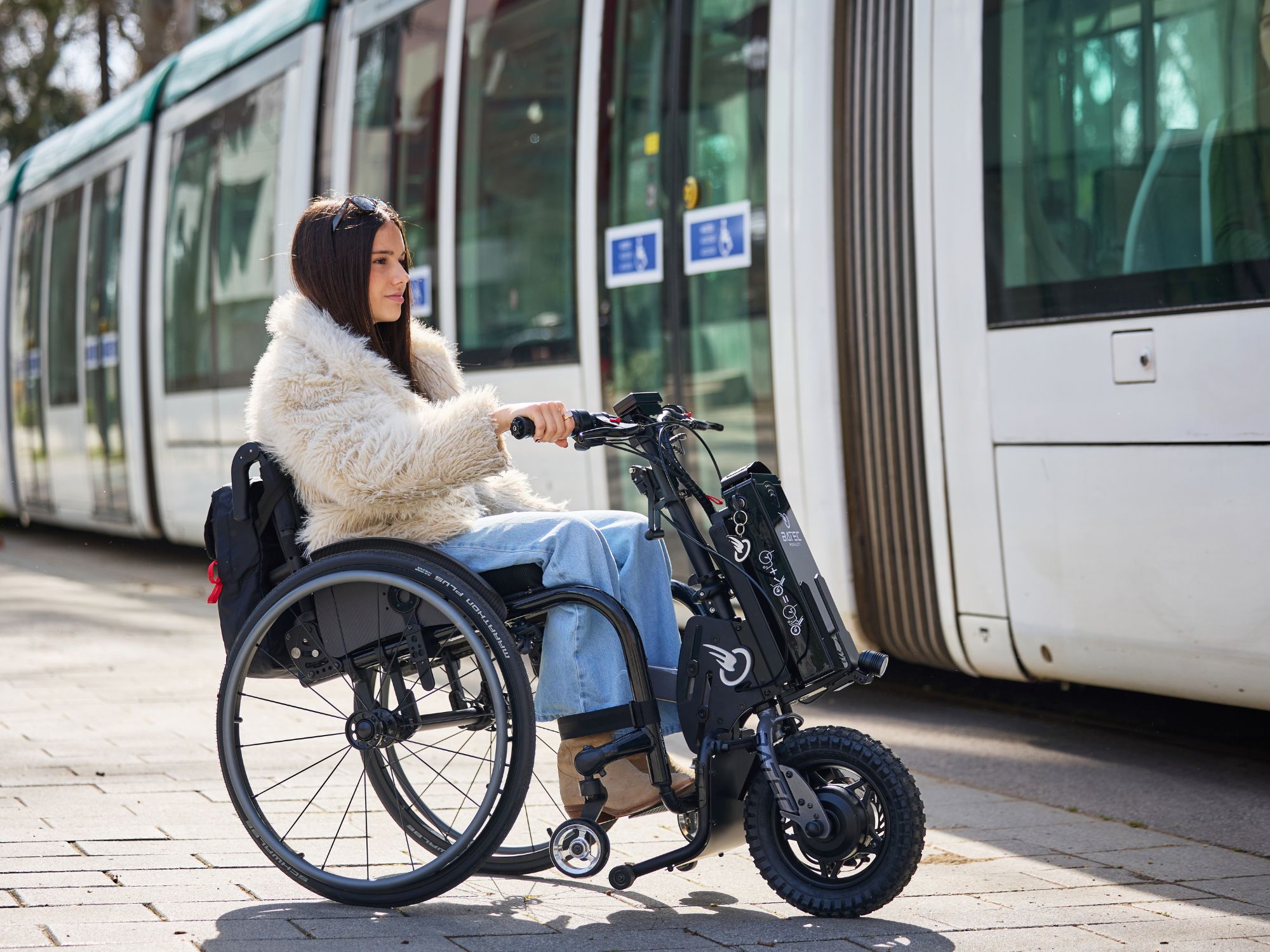
Batec Mobility models are designed to attach to a wide range of wheelchairs, offering complete safety, comfort and ease of use.
The quick-attachment system allows you to connect or disconnect the handbike in a matter of seconds, giving you the flexibility to adapt to different situations throughout your trip. This can be especially useful for people planning accessible travel across varied environments.
Greater independence when travelling
With powerful electric motors and long-lasting batteries, you can travel independently without relying on companions or specialised transport.
In addition, the personalised adjustments, such as handlebar height or the distance between the wheelchair and the Batec, ensure a comfortable ride tailored to each individual’s needs. For many wheelchair users, this added autonomy can make a significant difference.
An electric handbike for wheelchair users can therefore become a valuable support for longer journeys, tourism and everyday mobility.
Discover freedom on every route with lightweight electric handbikes
Moving with agility has never been easier, nor has it offered so many options to suit your lifestyle.
Our electric handbikes are designed to give you a choice of lighter or more powerful models, without compromising your independence or comfort, whether in the city or on uneven terrain.
Electric handbikes for urban environments
- Batec Air: lightweight and foldable, perfect as a second Batec thanks to its portability and ease of storage in a car boot.
- Batec Mini 2 plus:compact, practical and versatile. Its adaptable design ensures comfort, safety and ease of use in everyday life.
- Batec Electric 2 plus:designed for intensive use, delivering stability, comfort and precise control across all types of journeys.
Electric handbikes for off-road adventures
- Batec Rapid 2 plus:agile, dynamic and sporty. Its design makes it ideal for moving quickly and easily through more challenging environments.
- Batec Scrambler 2 plus: robust, all-terrain and adventurous. Built for demanding terrain, it provides traction, stability and freedom beyond the tarmac.
Travel insurance for wheelchair users and electric handbikes
One of the main concerns when flying is the potential loss of or damage to your wheelchair or handbike. That is why it is essential to have a policy that covers this type of incident.
Cover for mobility equipment such as wheelchairs or handbikes is not included by default in most travel insurance policies. It is only available in certain specialist policies or as an extension within baggage cover.
When included, it usually appears under terms such as ‘special baggage’, ‘orthopaedic equipment’ or ‘mobility devices’, although not all insurers provide this.
The most reliable approach is to contact the insurer directly so they can explain their policy on covering your wheelchair and personal mobility equipment.
When taking out travel insurance for wheelchair users, it is worth checking that it includes cover for loss of medication and medical expenses, both of which are particularly important when travelling abroad.
This way, you can relax and enjoy your trip, knowing that any unexpected issues will be easier to manage.
There are also liability insurance policies for wheelchairs and handbikes that cover any damage the user may cause to third parties during use, whether in everyday situations or while travelling.
These policies usually include legal defence and compensation. Although they are generally taken out in the country of origin, in many cases their cover can be extended to other countries, particularly within Europe, either automatically or through a specific travel extension.
It is therefore important to check the terms of each policy carefully, as not all insurance policies offer international cover.
What are the best places to travel in a wheelchair?
Travelling with a wheelchair is now an experience that can be enjoyed in many accessible destinations. Numerous cities have invested in inclusion and universal accessibility, although travel accessibility can still vary depending on the place and the specific route.
Barcelona: an accessible destination for wheelchair users
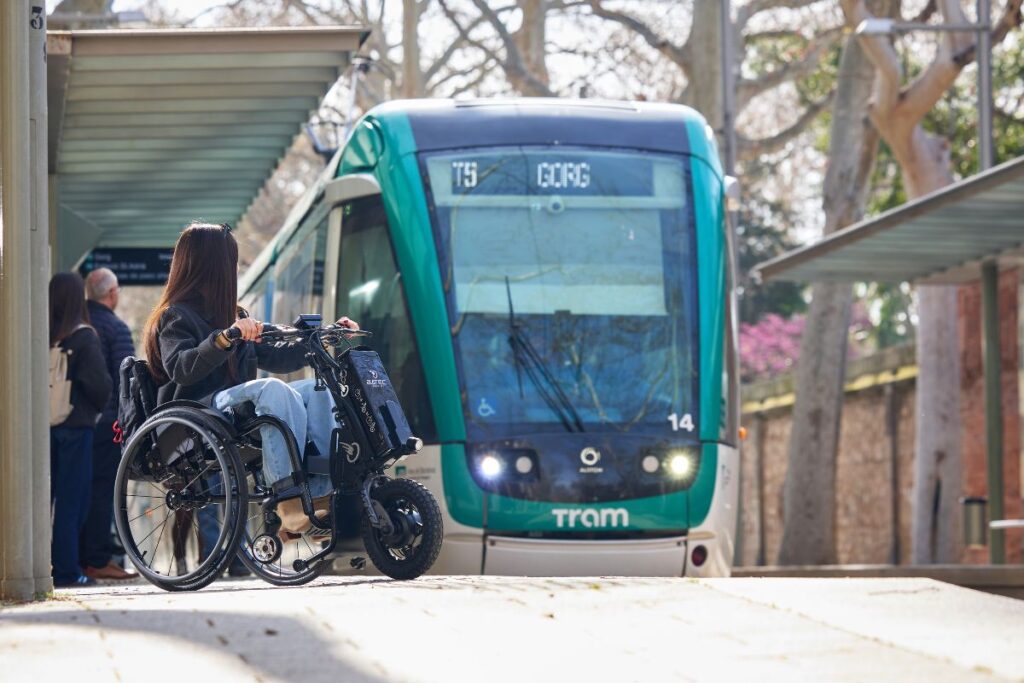
Barcelona is an international benchmark in accessible tourism. Its beaches offer walkways down to the water, amphibious chairs and assistance staff during the summer months.
In addition, the city has made significant progress in accessible urban mobility, making it one of the most recognised wheelchair accessible destinations in Europe.
Madrid: wheelchair accessible culture and transport
Madrid has made great strides in recent years. Although not all metro stations are fully accessible, the bus network is, and most museums and monuments provide step-free access.
The adapted taxi service is efficient and easy to use, and there are urban routes designed to explore the old town with a handbike or electric wheelchair.
Valencia: accessible travel by the sea
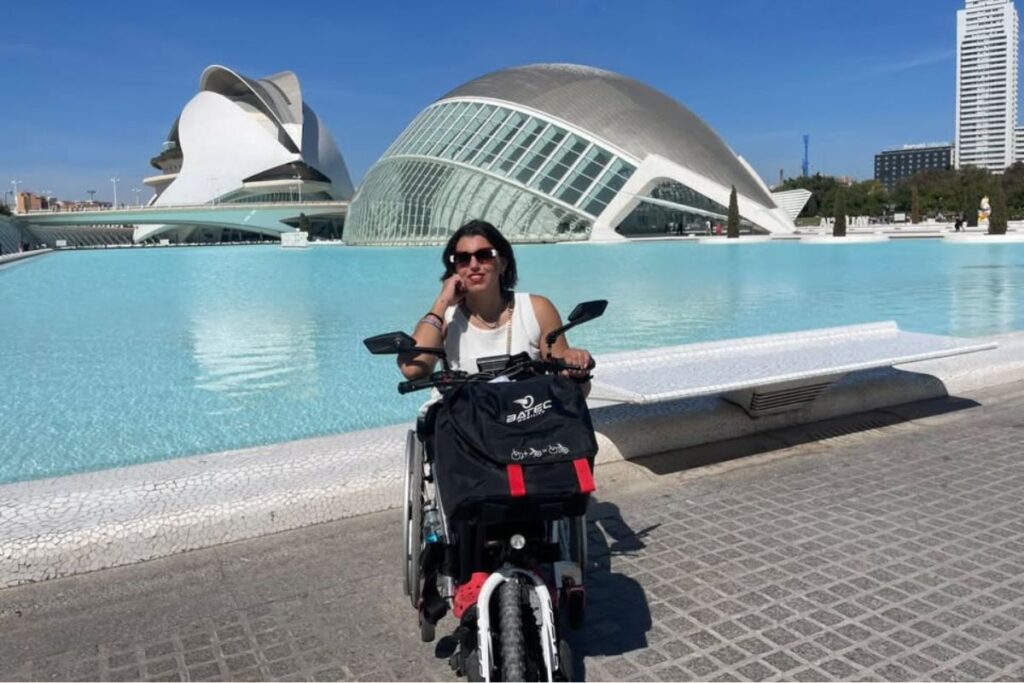
Valencia is a strong example of a modern, accessible city. Several of its beaches offer adapted services, and spaces such as the City of Arts and Sciences and the Oceanogràfic are designed to facilitate access and mobility for visitors with disabilities.
Its broad seafront areas and accessible attractions make it an appealing option for wheelchair users looking for a varied city break.
Beyond Spain: wheelchair accessible destinations in Europe
Berlin is among the most advanced cities, with accessible public transport, wide pavements, audible traffic signals and hotels certified under the ‘Reisen für Alle’ (‘Travel for All’) scheme.
Amsterdam has also made strong progress in inclusion. Although its canals and narrow streets may seem challenging, the city has introduced portable ramps, accessible buses and adapted accommodation. Even canal boat tours offer accessible vessels.
London remains one of the most inclusive capitals in Europe. Its black cabs are accessible by design, most buses have automatic ramps and many Underground stations are accessible or provide assistance.
Major museums are free to enter and accessible, making the city an ideal destination for disabled travellers seeking greater independence during their trip.
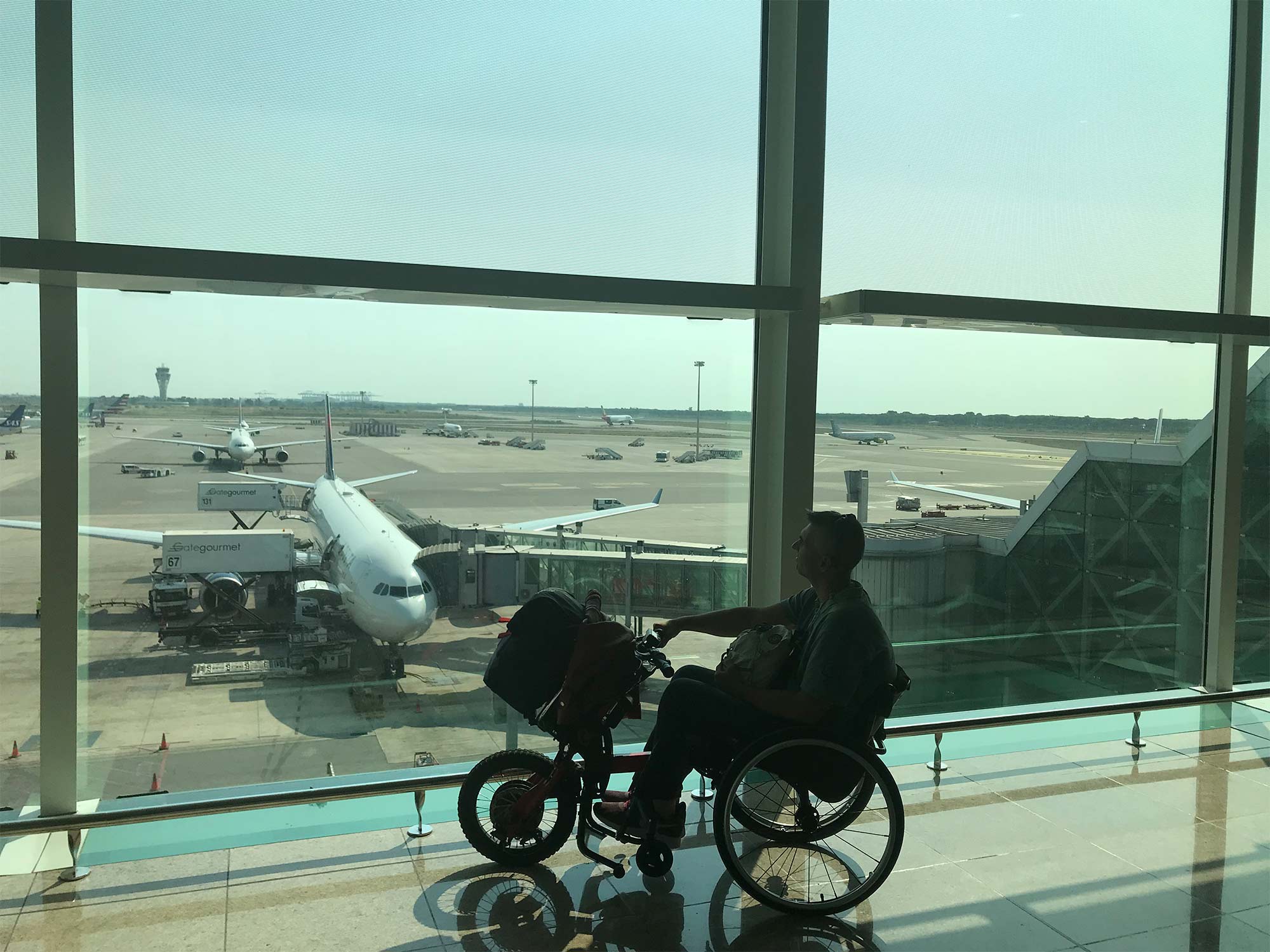
Air travel in a wheelchair and with an electric handbike
Have you ever wondered how to plan air travel in a wheelchair with your electric handbike without complications?
While it may seem challenging, with the right preparation and a few practical tips, transporting your handbike can be far easier and safer than you might expect.
This is especially useful for those thinking about international travel in a wheelchair or wondering how to travel by plane when in a wheelchair with greater peace of mind.
Get all the details in our Instagram post!
Do disabled travellers and wheelchair users receive transport discounts?
Transport discounts for disabled travellers and wheelchair users vary depending on the country, operator and type of journey.
In the UK, there are several schemes that can make public transport more affordable. Across Europe, the available support differs from one destination to another, so it is always worth checking the conditions in advance.
Air travel assistance for disabled passengers
Air fare concessions for disabled passengers are not standardised and depend on the airline.
However, passengers with reduced mobility are entitled to airport assistance and support during boarding, as well as the transport of mobility equipment under applicable passenger rights rules.
In the UK, disabled passengers can travel with up to two items of mobility equipment free of charge, and this does not count towards the usual baggage allowance.
Rail discounts for disabled travellers in the UK
In Great Britain, eligible passengers can apply for a Disabled Persons Railcard, which offers one-third off rail fares for the cardholder and one accompanying adult.
This can be especially useful for people planning accessible journeys by train, whether for everyday travel or longer trips within the UK. These benefits are among the most useful transport discounts for disabled travellers.
Bus passes and local travel concessions
In England, eligible disabled residents can apply for a disabled person’s bus pass, which provides free off-peak local bus travel under the English National Concessionary Travel Scheme.
Local rules can vary, and some areas offer additional concessions. In London, for example, eligible residents may qualify for a Disabled Person’s Freedom Pass, which provides free public transport across much of the capital under the scheme’s conditions.
Transport discounts and accessibility across Europe
Across Europe, transport discounts and concessions for people with disabilities are not standardised. The support available can differ by country, region and operator, while EU rules establish certain assistance rights for travellers with disabilities or reduced mobility.
For that reason, it is worth checking the transport authority of the destination before travelling, especially when planning accessible travel abroad.
How can disabled travellers apply for transport discounts?
The process for applying for disability-related travel discounts depends on the country and transport operator.
In the UK, rail discounts may be available through the Disabled Persons Railcard, while bus travel concessions are generally managed through local councils or regional transport authorities.
Eligibility criteria and required documents can vary, so it is important to check the current requirements before applying for transport discounts.
When travelling elsewhere in Europe, requirements may differ significantly. Some destinations provide local concession cards, while others offer support mainly through accessible transport services rather than reduced fares.
Checking the latest information in advance can help you avoid surprises and plan your journey with greater confidence.
Travelling with a wheelchair: your journey, without limits
Travelling with a wheelchair is no longer a barrier, but an opportunity to rediscover the world from a different perspective.
With the help of electric handbikes, you can explore cities, discover natural landscapes and enjoy the independence every journey should offer.
If you are ready to move beyond the limitations of manual mobility, Batec Mobility is here to support you. We have a distribution network for our electric handbikes across Spain and in 25 countries worldwide.
What are you waiting for to start planning your next adventure? Find your nearest distributor or explore our different models.