Wheelchairs for disabled people can make it easier to get around, explore new places and stay actively involved in daily life. Whether you use a manual wheelchair or need extra support for longer journeys, choosing the right mobility solution can make a real difference to your everyday independence.
For many people with reduced mobility, achieving greater freedom requires practical, adapted solutions. Thanks to advances in mobility technology, combining the right wheelchair with an attachable handbike can open up new possibilities for everyday travel and outdoor activities.
At Batec Mobility, specialists in the design and manufacture of handbikes for wheelchairs, we explain how our devices can transform your wheelchair to give you greater freedom, autonomy and confidence wherever you go.
What are attachable handbikes for manual wheelchairs?
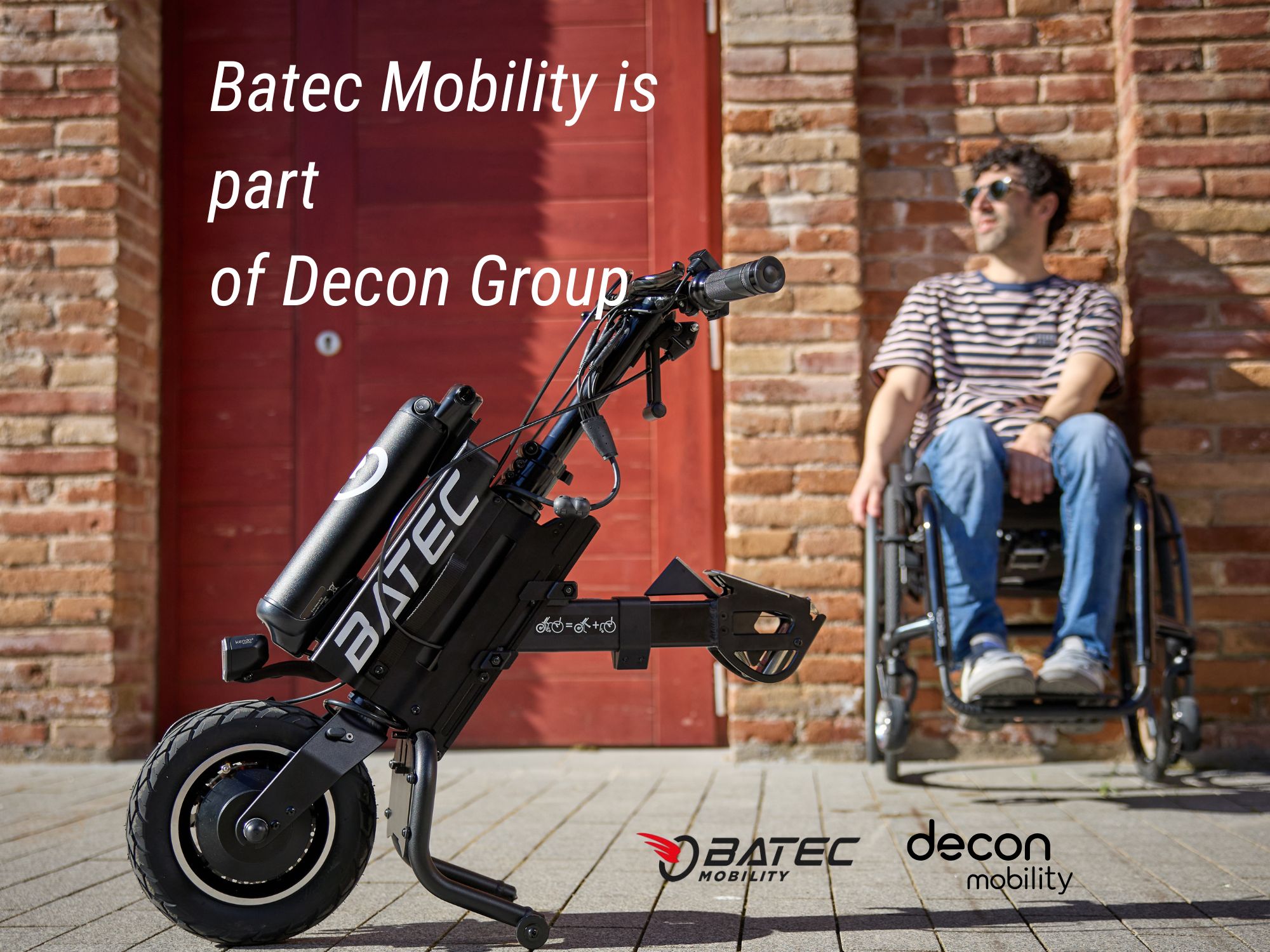
An attachable handbike is a device that connects to the front of a manual wheelchair, transforming it into a vehicle similar to an electric or manually powered tricycle.
It typically includes:
- A front wheel with a larger diameter than the wheelchair wheels.
- Handlebars with brakes and controls, such as a throttle, display and assistance settings.
- An attachment system designed to connect securely to the wheelchair frame.
- Different configurations, including electric handbikes powered by a battery and hybrid models that combine electric assistance with manual pedalling.
In short, a handbike for wheelchair users is a practical way to transform everyday mobility without having to replace your existing wheelchair.
Electric wheelchair or handbike for wheelchair: what is the difference?
Although both options are designed to increase independence, an electric wheelchair and an attachable handbike for a manual wheelchair offer very different approaches to mobility.
Configuration and everyday use
An electric wheelchair is a complete mobility solution that integrates the frame, motor, batteries and control system into a single unit.
Typically operated using a joystick, it is designed for continuous use and offers a high level of stability and comfort, particularly over longer distances.
With a manual wheelchair combined with an attachable handbike, the wheelchair remains the foundation of the system. The handbike connects to the front of the chair, whether it has a folding or rigid frame.
Once attached, the wheelchair becomes a vehicle similar to a scooter or tricycle. When detached, it instantly returns to its standard manual configuration.
Indoor and outdoor wheelchair mobility
Indoors, such as at home, in the workplace or in smaller shops, a large electric wheelchair can be more challenging to manoeuvre around narrow doorways or tight corners due to its size and weight.
While some electric wheelchairs are specifically designed for indoor environments, they may offer less performance on uneven surfaces.
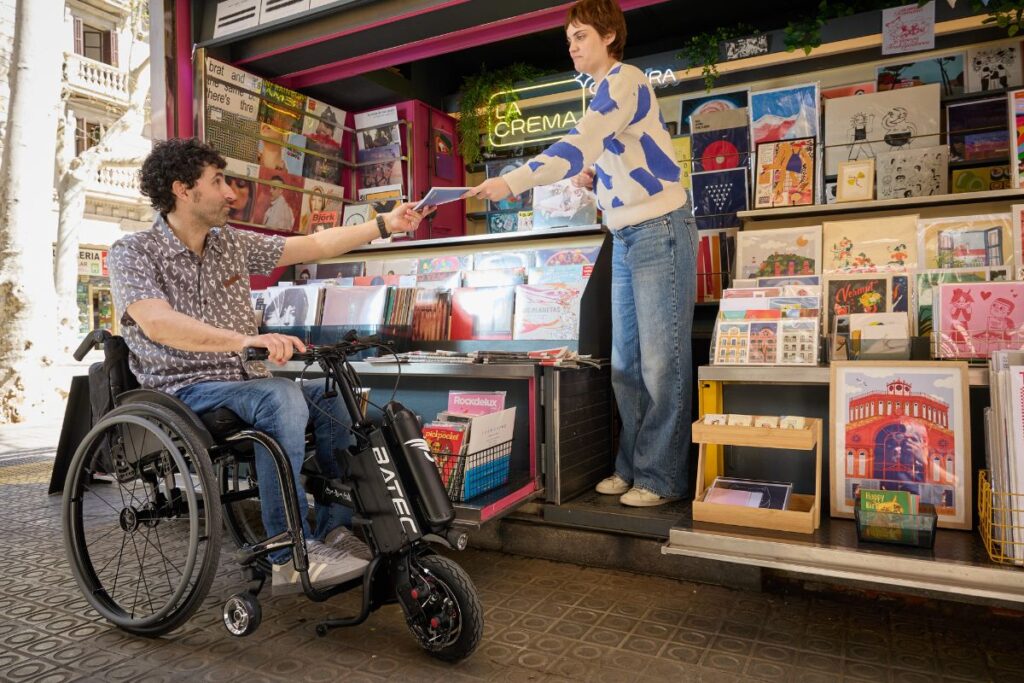
By contrast, a manual wheelchair remains light, practical and highly manoeuvrable in narrow corridors, small lifts or around restaurant tables when the handbike is detached.
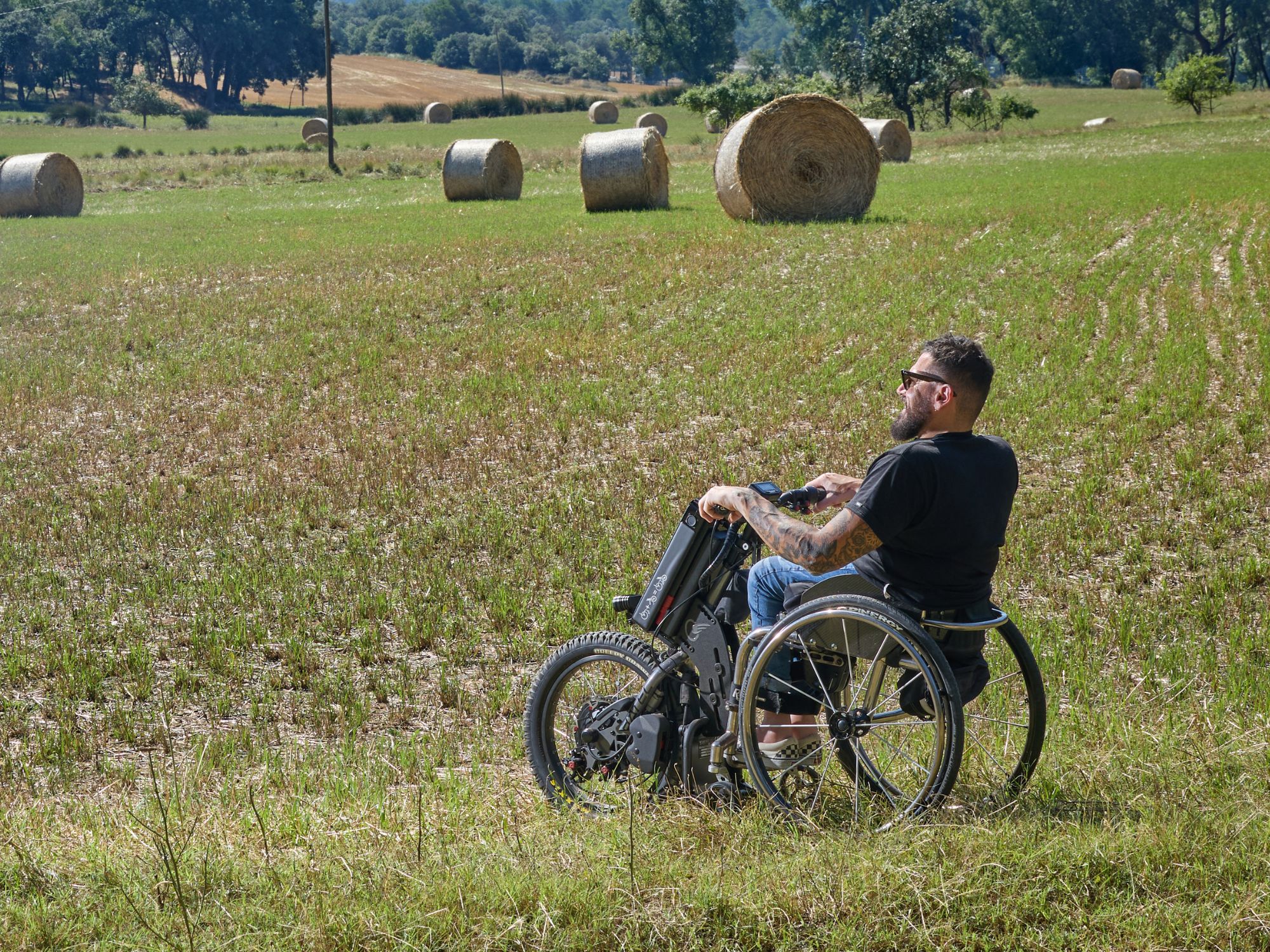
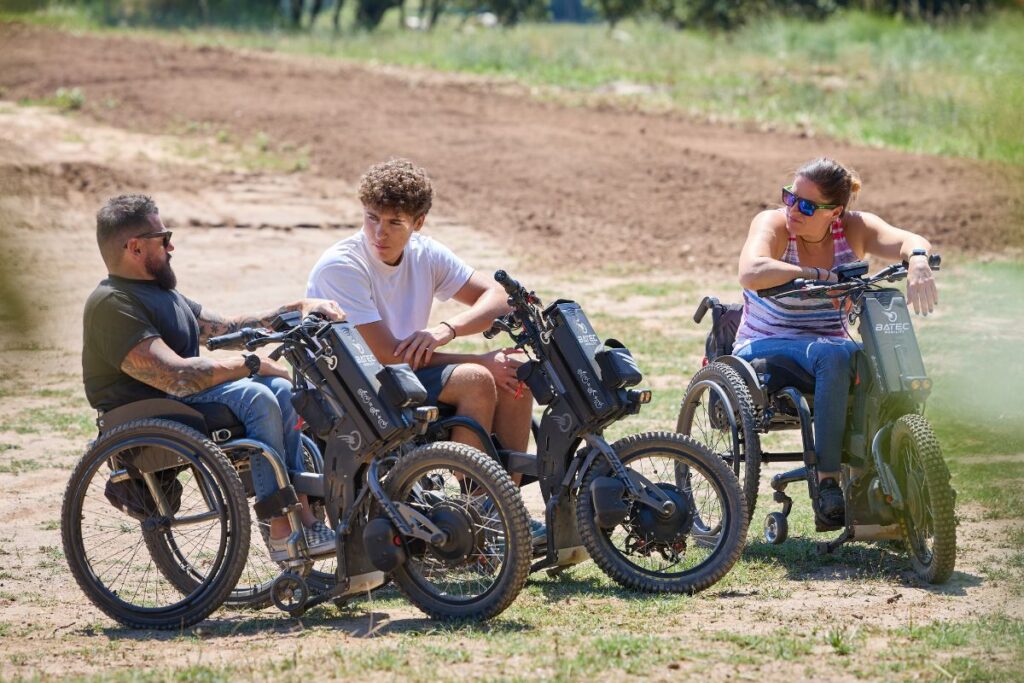
For the city, countryside or while travelling, attachable handbikes are designed precisely to support outdoor mobility. They can help users navigate uneven surfaces, bumpy pavements, ramps, slopes, long promenades and recreational routes.
Are wheelchairs for disabled people compatible with handbikes?
One of the most common questions we hear is: “Can I attach a handbike to my wheelchair?” In most cases, the answer is yes.
Our handbikes are compatible with approximately 95% of manual wheelchairs currently available on the market. Thanks to adjustable attachment systems, they can be fitted to both rigid-frame and folding-frame wheelchairs.
At Batec Mobility, we provide a compatibility guide so you can quickly check whether your wheelchair can be fitted with one of our handbikes.
If your wheelchair does not appear on the list, we encourage you to contact us so we can assess how to adapt it whenever possible.
This flexibility makes wheelchairs for disabled people far more versatile, allowing many users to transform their existing chair into a more powerful and independent mobility device for everyday life.
How to choose a mobility device for outdoor use
When considering ways to improve mobility outdoors with your current wheelchair and a possible attachable handbike, it is important to take several key factors into account.
Type of use and lifestyle
Before choosing a mobility device, think about how and where you move around most often:
- Do you mainly travel around the city, using pavements and cycle lanes?
- Do you regularly visit the countryside, dirt tracks or greenways?
- Do you need to cover long distances every day for work or study?
- Do you travel by plane frequently?
These questions can help each wheelchair user determine which type of wheelchair handbike best suits their routine, lifestyle and outdoor mobility needs.
Range and speed
Before choosing an attachable handbike, it is worth considering how many kilometres you typically travel each day and how much additional range you need to move around comfortably.
Our electric handbikes offer a range of between 20 and 55 km, depending on the model, battery option and conditions of use.
If you regularly travel several kilometres a day, you may benefit from a model with:
- A higher-capacity battery.
- A more powerful motor for tackling slopes.
- Multiple assistance or speed modes.
For many wheelchair users, this combination of range and control is what turns everyday basic mobility into genuine independence.
Weight and ease of transport
The weight of the device affects:
- Comfort when manoeuvring over ramps or kerbs.
- How easy it is to load into a car, store at home or keep in a storage space.
For many users, portability is a key consideration when choosing a handbike for wheelchair use, particularly if they travel frequently or need a flexible solution for everyday use.
Physical condition and wheelchair propulsion system
If you are looking for a way to exercise your upper body, a manual or hybrid handbike may be a good option. A hybrid model allows you to benefit from electric assistance when greater effort is required.
If you have limited strength in your arms or shoulders, an electric handbike can reduce the physical effort involved and help you conserve energy throughout the day.
This is one of the reasons why a wheelchair propulsion system can make such a difference to everyday independence, especially for people with reduced mobility who want to move more freely outdoors.
Does an attachable handbike offer the same range and speed as an electric wheelchair?
The comparison between an attachable handbike and a large electric wheelchair depends on the specific model, but some general observations can be made.
Range and wheelchair autonomy
The technical specifications of attachable electric handbikes typically indicate a range of around 20 to 50 km, although this will vary depending on factors such as user weight, terrain, average speed and the assistance mode selected.
Many large electric wheelchairs offer a similar range, although some models equipped with higher-capacity batteries may exceed these figures.
In practice, a good attachable handbike can comfortably cover:
- Daily journeys to work or class.
- Trips around the city.
- Weekend outings lasting several hours, provided the battery is used efficiently.
This allows many users to enjoy greater wheelchair autonomy without having to replace their everyday wheelchair.
Speed and performance
Attachable electric handbikes are designed to provide smooth mobility both in urban environments and on outdoor routes.
Some models offer power and speeds that can match, or even exceed, those of compact outdoor electric wheelchairs, always within the applicable regulations.
In everyday use, many users find that:
- The combination of a manual wheelchair and a handbike for wheelchair use feels agile and responsive.
- The large front wheel helps overcome kerbs, potholes and uneven surfaces.
- The handlebar position provides a more active driving experience than some larger electric wheelchairs.
This makes an attachable handbike a highly practical option for people seeking greater independence outdoors.
Batec wheelchair attachment: a practical option for outdoor mobility
A Batec wheelchair attachment is designed to transform a compatible manual wheelchair into a more powerful and versatile mobility solution.
This type of handbike attachment for wheelchair use can be particularly useful for people who want to retain the manoeuvrability of their wheelchair indoors while gaining additional power and range outdoors.
Depending on the model and the user’s needs, a Batec electric handbike can support daily journeys, leisure rides, commuting and travel.
For those considering an electric handbike for wheelchair use, one of the main advantages is flexibility. The handbike can be attached when additional propulsion is needed and removed whenever the wheelchair needs to return to its manual configuration.
This makes the Batec handbike a practical solution for wheelchair mobility, particularly on routes that involve slopes, uneven ground or longer distances.
Transform your wheelchair mobility with attachable handbikes
Wheelchairs for disabled people have come a long way in terms of comfort, ergonomics and design. However, attachable handbikes have taken outdoor mobility a step further, allowing a manual wheelchair to become a more agile and powerful means of transport without losing the manoeuvrability of the original chair.
As specialists in handbikes and wheelchair propulsion systems, at Batec Mobility we have developed devices that meet the real needs of wheelchair users and people with reduced mobility.
If you are ready to take the next step towards greater independence, discover our range of attachable handbikes and get in touch with us.
With the right solution, you can change the way you move, explore further and enjoy every journey with the confidence of using technology designed to support you kilometre after kilometre.
For many people, the wheelchair is the starting point. With the right handbike, it can become the key to greater independence, outdoor freedom and everyday mobility autonomy.